
 EN
EN
 AR
AR
 HR
HR
 NL
NL
 FR
FR
 DE
DE
 IT
IT
 JA
JA
 KO
KO
 PL
PL
 PT
PT
 RO
RO
 RU
RU
 ES
ES
 SV
SV
 ID
ID
 TH
TH
 TR
TR
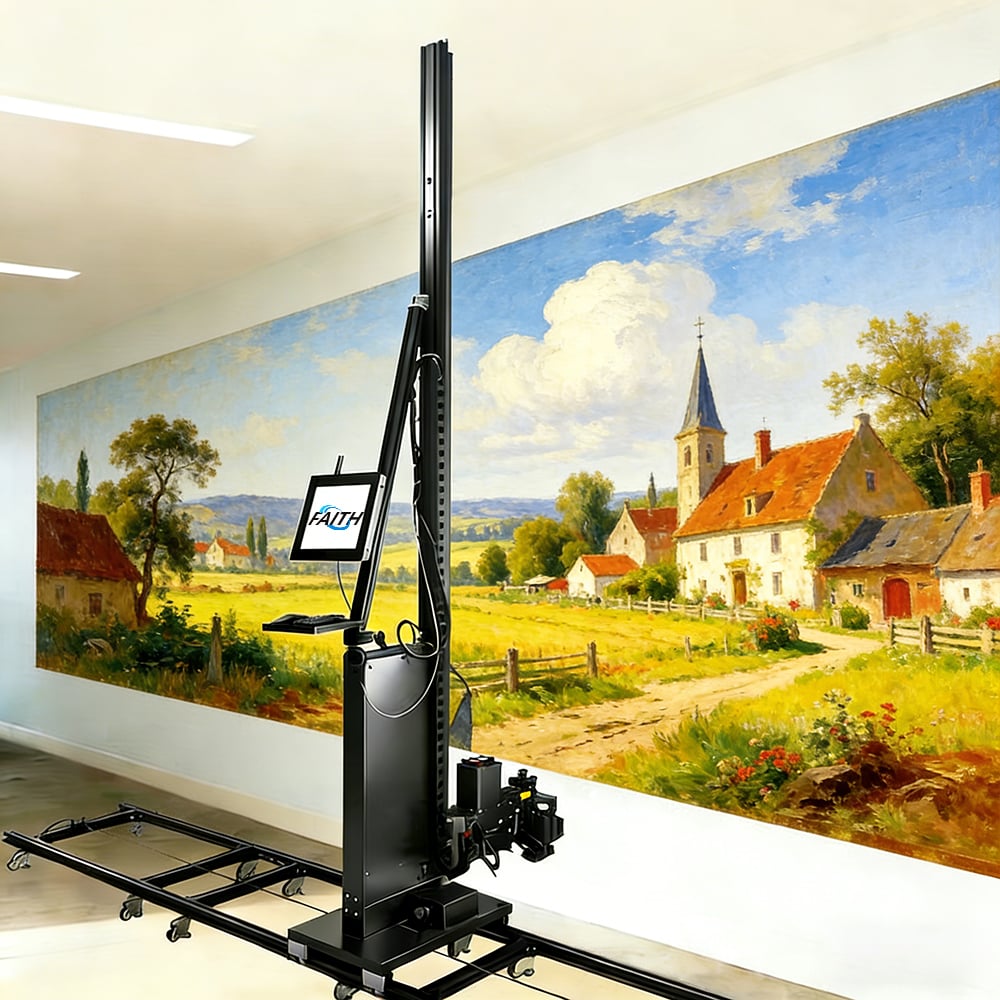
Transform any wall into a high-precision art canvas without paintbrushes.
In today's world, where personalization and digitalization are sweeping across industries, the interior design industry is undergoing a profound transformation led by wall printers (also known as wall surface printers or vertical printers). These devices, once confined to industrial fantasies, are now entering homes and commercial spaces, redefining our understanding of wall decoration.
Whether you're an interior designer seeking differentiation, an entrepreneur looking to start a business on a low cost, or a homeowner wanting to create a unique mural for your living room, understanding wall printer technology will open a whole new door for you.
What is a wall printer? How does it work?
A wall printer is a digital inkjet printer that can print images, patterns, or text from a computer directly and with high precision onto vertical surfaces such as walls, glass, wood, tile, and even metal.
How it works: It works similarly to your desk printer, but has been completely industrialized to adapt to vertical operations. Its core components include:
Drive system: Enables precise horizontal and vertical movement of the printhead along a track on the wall.
Printhead: Employs high-precision inkjet technology to eject fine ink droplets.
Control system and sensors: Built-in sensors detect the wall's flatness in real time and automatically adjust the distance between the printhead and the wall, ensuring high-quality output even on uneven, textured walls.
The workflow is very simple: Pre-process the wall → Import the design → Automatic device calibration → Start printing. The entire process is highly automated, typically completing the decoration of an entire wall in just a few hours.
Why choose a wall printer? Core advantages explained
Compared to traditional wall decoration methods (such as hand-painting, wallpaper, and stencil spraying), wall printers have overwhelming advantages.
1. Unlimited personalization and design freedom
This is the greatest charm of wall printing. Wallpaper only offers a limited selection of fixed patterns, while hand-painting is limited by the artist's skill and time. Wall printers give you absolute creative freedom. Whether it's a high-resolution photo taken during your travels, your child's doodles, an intricate brand logo, or textures resembling wood, stone, or even distressed vintage finishes, as long as you can digitize it, it can be accurately reproduced on the wall.
2. Extremely High Efficiency and Construction Speed: Traditional hand-painting of a complex mural might take days or even weeks, while a wall printer typically only takes hours. For example, in some public art projects, the workload that would normally require weeks of hand-painting can be completed in just 3 hours with a wall printer, creating a large, clear mural. This high efficiency means lower labor costs and shorter construction cycles, which is especially important for commercial clients.
3. Superior Durability and Environmental Performance: Modern high-end wall printers mostly use UV-curing inks or eco-solvent inks. UV inks dry and cure instantly upon printing under ultraviolet light, possessing waterproof, scratch-resistant, and UV-resistant properties, ensuring that the image will not fade for 8-10 years in indoor environments. At the same time, these inks are mostly non-toxic and odorless, containing no harmful chemicals, and produce no volatile odors during the printing process, making them very friendly to environmentally sensitive spaces such as homes, schools, and hospitals.
4. Extremely Low Material and Surface Limitations
You can print on virtually any flat, hard surface: latex-painted walls, concrete, tile, glass, wood, metal, stone, and even the surface of old furniture. This provides endless possibilities for material mixing and renovation in interior design.
Interior Applications: Limitless Possibilities from Residential to Commercial Spaces
The versatility of wall printers makes them suitable for almost all industries and space types.
1. High-End Residences and Personalized Homes
Immersive Themed Walls: Create massive landscape murals in the living room or an abstract art atmosphere in the bedroom.
Customized Children's Rooms: Print your child's favorite cartoon characters, fairytale scenes, or world maps directly on the wall—safe, fun, and with easily changeable themes as the child grows.
Retro Style Recreation: Combining UV printing technology with post-processing aging effects, you can perfectly replicate 1920s retro posters or 1950s floral patterns, creating a nostalgic space with a sense of history.
2. Commercial Spaces and Brand Building
Corporate Image Wall: Display the company logo and mission vision with high precision and color saturation on the walls of reception areas or meeting rooms, creating a professional and unique brand atmosphere.
Retail and Food & Beverage: Cafes, restaurants, and hotels can use wall printers to create unique and immersive dining environments. For example, printing an entire menu wall, local landscape paintings, or Instagram-style photo backdrops effectively enhances customers' desire to share on social media.
3. Office and Public Spaces
Enhancing Office Culture: Print inspirational quotes and company history in open office areas, or create art galleries in corridors to improve employee sense of belonging and visitor impressions.
Education and Healthcare: Schools can use this technology to print educational charts and historical scrolls in corridors; hospitals can print cartoon images in pediatric wards to alleviate children's anxiety, or print tranquil natural scenery in rehabilitation areas to help patients relax.
Wall Printing vs. Traditional Decoration Methods
To help you understand the advantages more intuitively, here's a comparison between wall printing and traditional methods:
Comparison with Hand-Painting: Wall printing is extremely fast, produces consistent results with photo-quality precision, and doesn't require highly skilled artists; hand-painting is slow, labor-intensive, and its quality depends heavily on the artist's skill.
Comparison with Wallpaper/Stickers: Wall-printed patterns are seamless, blend into the wall, and don't curl, bubble, or peel; wallpaper/stickers have seams, edges are prone to curling, and they are susceptible to fading or mold over time.
Comparison with Template Spraying: Wall printing requires no template making, supports full-color gradients and complex images, and eliminates template waste; template spraying is limited to color-blocking patterns, and template creation is time-consuming and wasteful of materials.
Wall Printing as a Business Opportunity: A Blue Ocean for Entrepreneurs
For entrepreneurs looking for new business opportunities, investing in a wall printer is a relatively low-barrier-to-entry option with a growing market.
Strong Market Demand: With the rise of personalized spaces on social media, more and more homeowners and businesses are willing to pay for unique wall designs. The global wall printing market is estimated to be steadily growing and is projected to reach hundreds of millions of dollars by 2035.
Diverse Revenue Models: You can offer a variety of services to increase your revenue streams, such as:
Residential Customization: Children's room murals, TV background walls, artfully designed bedrooms.
Commercial Projects: Cafe brand walls, office culture walls, store promotional information.
Old House Renovation & Remodeling: Quickly cover stains or unwanted colors on old walls.
Furniture and Door Panel Customization: Give old furniture a new lease on life, printing vintage patterns or modern textures.
How to Choose the Right Wall Printer for You?
With numerous models on the market, choosing the right machine is key to success. When purchasing, we recommend focusing on the following core elements:
Print Resolution: Measured in DPI, the higher the value, the richer the detail. For detailed portraits or artwork, a model with a DPI of 1200 or higher is recommended; for general decoration, 600-900 DPI is sufficient.
Ink Type: UV ink is the preferred choice for both indoor and outdoor use, offering fast curing, environmental friendliness, and durability. If used only indoors and on a limited budget, high-quality water-based pigment inks are also an option.
Portability and Size: Consider your primary work environment. If you frequently need on-site service, choose a modular, lightweight portable model; if focusing on factory production, a large-format printer with a fixed frame is preferable.
Smart Features: Automatic leveling systems and wall distance sensors are crucial, ensuring stable printing even on uneven walls and minimizing waste.
Conclusion: Wall printers are more than just devices; they are a bridge connecting digital creativity with the physical world. They are breaking down the barriers of traditional interior design, allowing everyone to decorate their living spaces with lower costs, higher efficiency, and unlimited creativity.
Whether you're looking to create a cozy home, stand out in the competitive business world, or start your own creative business, wall printing technology is worth exploring and investing in.