
 EN
EN
 AR
AR
 HR
HR
 NL
NL
 FR
FR
 DE
DE
 IT
IT
 JA
JA
 KO
KO
 PL
PL
 PT
PT
 RO
RO
 RU
RU
 ES
ES
 SV
SV
 ID
ID
 TH
TH
 TR
TR
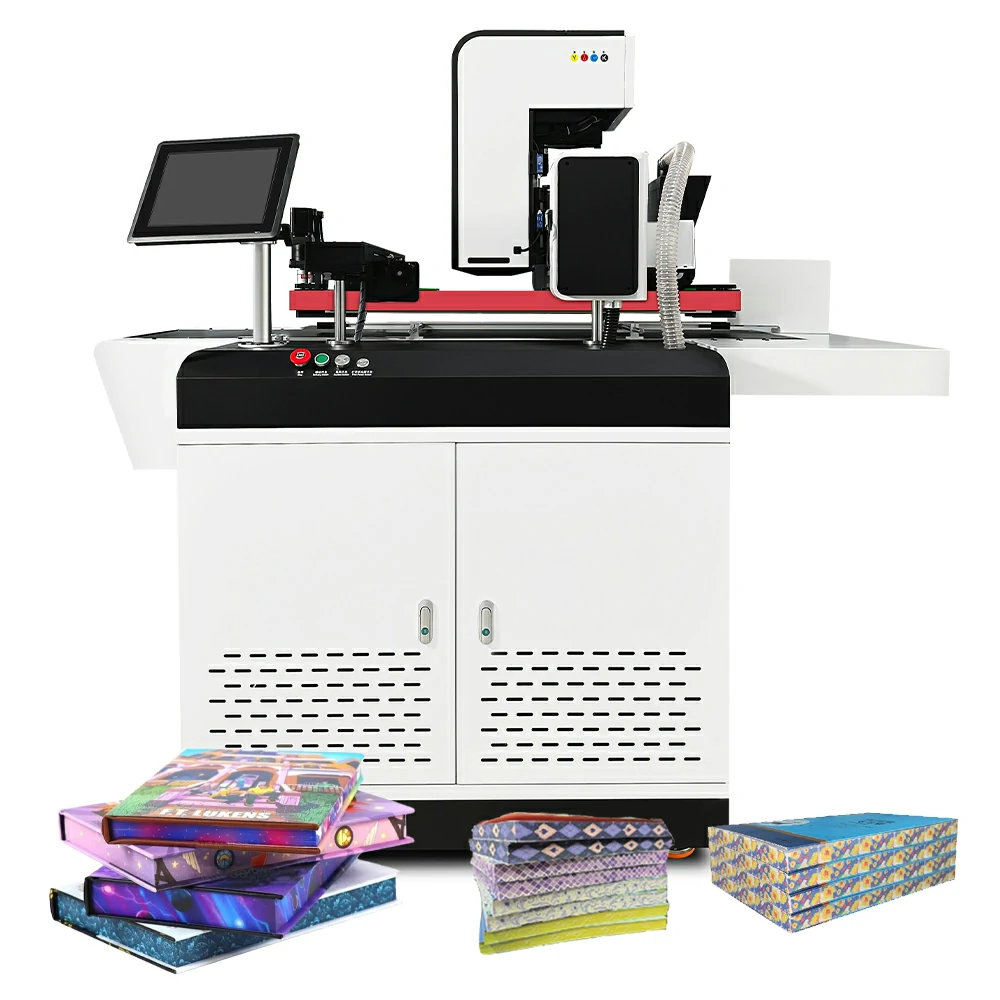
In the bookbinding industry, book edge printing is becoming a key process for enhancing book recognizability and collectible value. This customized design, printed directly onto the edges of the book block before binding and trimming, can give ordinary books a unique charm, playing an irreplaceable role in attracting readers' attention and showcasing brand style. Currently, the mainstream book edge printing processes are mainly divided into two types: spray-painted edges and forced edges (forced edges), each with its own characteristics in terms of technical principles, visual effects, and application scenarios.
Among spray-painted edge processes, spray-painted edges are a classic choice for hardcover books. By adding color or patterns to the outer edge of the cover, it can echo the illustrations and cover design in the book, and even highlight specific chapters. Its advantages lie in its vibrant colors and strong graphic expression, but although its durability is superior to ordinary binding, it still requires proper maintenance—stored vertically in a cool, dry place, avoiding direct sunlight, and regularly dusted, to maintain its long-term beauty. Digital inkjet printing for book borders has risen to prominence thanks to print-on-demand (POD) technology. Similar to stencil printing, this digital inkjet method allows special inks to "reveal" the design when the book is opened. It requires no additional equipment and is compatible with full-bleed printing services like KDP and IngramSpark, providing a convenient solution for small-batch customization.
Forced edge printing (forced edge printing) takes a more subtle approach, embedding the design beforehand into the outer edge of the manuscript, allowing it to naturally appear during binding and trimming. This process also requires no additional equipment and is compatible with services like IngramSpark, but it has design limitations: metallic colors and gold foil cannot be used, and the design is not visible on the outer edge when the book is closed, only revealed when the pages are turned. Because of this unique "revealing" effect, forced edge printing is highly favored in hardcover special editions and limited-edition books, significantly enhancing their collectible value and social media visibility.
Professional equipment is the core guarantee of high-quality book edge printing. For example, the CHROMOEDGE intelligent automatic book edge printing machine, with its circulating piezoelectric inkjet technology, can achieve high-speed, efficient, and precise three-edge printing. It also boasts high reliability and self-sufficiency, maintaining smooth production without manual intervention, providing technical support for the large-scale application of both processes.
The choice between spray-painted and pressed edges depends on the book's positioning: if a strong visual impact and rich colors are desired, spray-painted edges are preferred; if a low-key, luxurious collectible feel and a unique reading experience are emphasized, pressed edges are more advantageous. Regardless of the process, book edge printing breaks the traditional boundaries of bookbinding, making each book a unique work that combines reading value and artistic quality, helping books stand out in the highly competitive book market.