
 EN
EN
 AR
AR
 HR
HR
 NL
NL
 FR
FR
 DE
DE
 IT
IT
 JA
JA
 KO
KO
 PL
PL
 PT
PT
 RO
RO
 RU
RU
 ES
ES
 SV
SV
 ID
ID
 TH
TH
 TR
TR
I. Introduction: A Game-Changer in Wall Design
Traditionally, wall decoration relied heavily on hand painting and wallpapering. Hand painting offers artistic flexibility but is slow and expensive, especially for complex murals that may take weeks. Wallpaper, while faster, limits design options to pre-made patterns and often requires wall repairs during installation or replacement.
Wall printing machines revolutionize this process. They can reproduce detailed digital designs on walls in just a few hours—ranging from personalized artwork to brand logos. This innovation not only enhances efficiency and quality but also expands creative possibilities for designers and homeowners alike. Understanding how these machines operate helps illustrate their potential to reshape the wall decoration industry with faster, cost-effective, and eco-friendly solutions.
II. How Wall Printing Machines Work: From Digital File to Finished Wall
A. Digital Design and Machine Setup
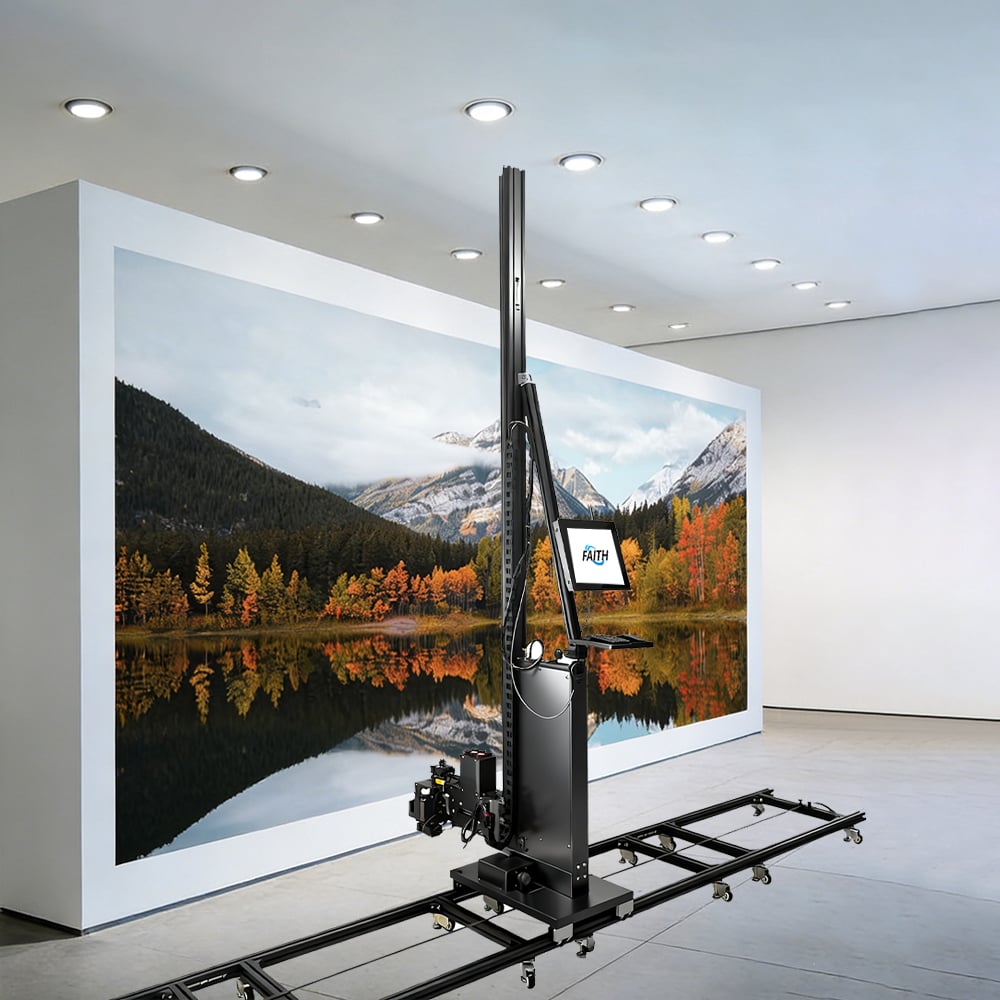
The process starts with creating a digital design using software like Adobe Photoshop or Illustrator, supporting file formats such as AI, EPS, and JPG. After design completion, the machine is mounted on a vertical rail system, requiring precise measurements for smooth operation.
Advanced models feature laser sensors to detect wall irregularities in real time. If the surface is uneven, the system adjusts the printhead distance automatically, ensuring precise results. For instance, Tudox Wall Printers accommodate walls up to 4 meters high and can handle complex surfaces like brick, plaster, or glass, making them suitable for both commercial and home projects.
B. Inkjet Printing and Color Accuracy
Wall printers use high-resolution inkjet technology, spraying microscopic ink droplets at thousands of times per second, achieving sharp, vivid prints. UV-curable inks dry instantly during printing, preventing smudges and allowing printing on various surfaces including plaster, wood, and metal.
These inks are environmentally friendly, with low VOC emissions and long-lasting results. Built-in color calibration ensures accurate reproduction of brand colors, which is critical for logos and standardized designs.
C. Automation and Smart Maintenance
Modern wall printers include self-cleaning systems to prevent clogging, multi-section splicing for large patterns, and app-based remote control for monitoring progress. These features reduce manual work, increase efficiency, and allow seamless printing of large-scale murals.
III. Advantages and Applications
A. Efficiency and Cost Savings
Printing with wall machines is significantly faster than manual painting—covering 100 square meters in 6–7 hours versus weeks for hand painting. UV inks are used sparingly (6–10 ml per square meter) and last for years, cutting both material and labor costs.
B. Diverse Applications
These machines serve multiple industries:
- Commercial spaces: Custom murals and advertising walls.
- Healthcare and education: Calming or educational murals.
- Art and public projects: Large-scale graffiti or city beautification.
C. Eco-Friendly Design
Water-based inks, low-energy operation, and reusable rails reduce environmental impact, aligning with green building standards and sustainable practices.
IV. Future Trends
- 3D Texture Printing: Multi-layer ink deposition for relief effects like stone or wood textures.
- Augmented Reality Integration: Interactive murals that come alive via AR apps.
- AI Optimization: Smart adjustment of patterns and colors for irregular walls or varying light conditions.
V. Conclusion: Bridging Digital Design and Physical Space
Wall printing machines merge efficiency, precision, and sustainability, transforming walls into dynamic canvases. For entrepreneurs or designers, investing in this technology offers creative freedom, reduced costs, and fast returns, as evidenced by models like the Tudox Wall Printer. By adopting wall printing solutions, every wall becomes an opportunity to showcase art, branding, or imagination.