
 EN
EN
 AR
AR
 HR
HR
 NL
NL
 FR
FR
 DE
DE
 IT
IT
 JA
JA
 KO
KO
 PL
PL
 PT
PT
 RO
RO
 RU
RU
 ES
ES
 SV
SV
 ID
ID
 TH
TH
 TR
TR
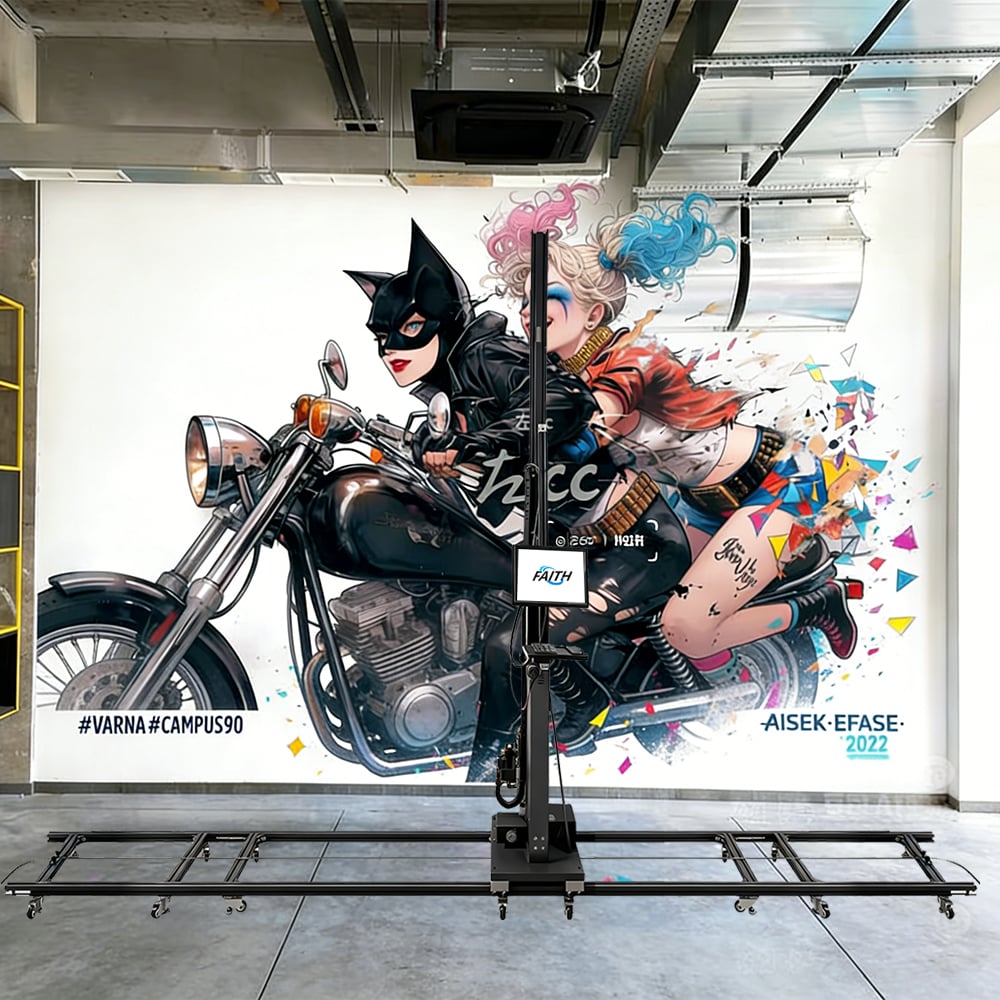
If you are planning to enter the wall printing industry or expand your existing digital printing business, choosing the right vertical wall printing machine will directly impact your project efficiency, customer satisfaction, and overall profitability.
Wall printing is no longer just an artistic tool. It has evolved into a scalable commercial solution widely used in advertising, interior decoration, commercial renovation, and visual branding projects in public and private spaces.
However, the market offers a wide range of models—from entry-level machines to industrial-grade 3D wall printing systems—each designed for different business needs. Making the right choice requires a careful evaluation of several key factors.
1. Define Your Business Direction First
Before selecting a machine, the most important step is to clarify your business focus.
Common applications include:
9. Future Trends in Industrial Wall Printing
Wall printing technology is evolving rapidly toward:
- Higher resolution and 3D visual effects
- Automated wall surface detection systems
- AI-assisted image optimization
- Faster printing speed
- Improved material adaptability
Industrial 3D wall printing machines are becoming the mainstream solution for large-scale commercial and high-end customized projects.
- Commercial advertising wall printing
- Interior decoration and mural artwork
- Architectural exterior wall design
- Brand space customization
- Event and signage production
If your business focuses on high-end artistic output, you will need stronger color performance and higher resolution. If efficiency is your priority, printing speed and operational stability should be the main considerations.
2. Your Target Customers Determine Your Equipment Choice
Wall printing machines are not one-size-fits-all solutions. Your target customer base will significantly influence your decision.
Typical customers include:
- Restaurants, cafés, and fitness centers
- Interior designers and decoration companies
- Advertising and branding agencies
- Real estate developers and hotels
For commercial clients requiring fast delivery, stability and efficiency are essential. For artistic or design-oriented clients, precision and visual quality become more important.
3. Wall Materials and Working Environment
The actual working environment is a critical factor often overlooked.
Wall printing projects may involve:
- Cement walls
- Latex-painted surfaces
- Brick walls
- Glass or metal surfaces
- Indoor smooth walls and outdoor textured surfaces
Different machines offer different levels of surface adaptability. Some industrial wall printing systems are equipped with intelligent sensor technology that automatically detects wall height and surface irregularities, ensuring stable printing performance.
Advanced industrial-grade 3D wall printing systems can maintain high clarity even on uneven surfaces, which is especially important for complex architectural environments.
4. Print Quality and Resolution
Print quality directly determines the commercial value of the final output.
Generally:
- Entry-level machines: suitable for basic patterns and simple graphics
- Mid-to-high-end machines: suitable for commercial branding and advertising
- Industrial systems: designed for large-scale murals and high-precision artistic projects
Higher resolution enables better reproduction of gradients, shadows, and fine details, resulting in more visually impactful wall designs and higher project pricing potential.
5. Speed and Production Efficiency
In commercial operations, time directly affects profitability.
Key efficiency factors include:
- Printing speed per square meter/foot
- Continuous working capability
- Automatic ink supply system
- Self-cleaning functions
Industrial wall printing machines are designed for long, uninterrupted operation, making them suitable for large-scale projects and batch orders.
For service providers, higher efficiency directly translates into stronger project delivery capacity and increased revenue potential.
6. Ink System and Material Compatibility
Different ink technologies are suitable for different applications:
UV Ink System
Compatible with a wide range of materials, including:
- Glass
- Metal
- Acrylic
- Wood
- Composite surfaces
UV ink offers strong adhesion and excellent durability, making it suitable for both indoor and outdoor applications.
Water-Based Ink System
More environmentally friendly and ideal for indoor projects. However, it generally has more limited material compatibility compared to UV ink systems.
A machine with broader material compatibility provides greater flexibility for diverse project requirements.
7. Equipment Cost and Return on Investment
When evaluating equipment, it is important to consider not only the purchase price but also the total cost of ownership:
- Initial machine cost
- Ink and consumables
- Maintenance and spare parts
- Labor and training costs
Wall printing is a high-value service industry. With proper operation and market positioning, many businesses can achieve relatively fast ROI, depending on project volume and pricing strategy.
8. Brand Reliability and After-Sales Support
Machine reliability is critical for commercial operations.
When choosing a supplier, pay attention to:
- Manufacturing experience and industry reputation
- Availability of long-term technical support
- Spare parts and consumables supply chain
- Training and remote assistance services
For international buyers, responsive after-sales support is often more important than price, as machine downtime directly affects revenue.
Conclusion
Choosing the right vertical wall printing machine is not just an equipment decision—it is a strategic business decision.
To build a sustainable business in this industry, you should focus on:
- Clear business positioning
- Understanding your target market
- Selecting appropriate resolution and speed
- Ensuring machine stability and support
- Evaluating long-term profitability
As market demand continues to grow, wall printing is shifting from a creative tool into a commercial production technology, offering strong opportunities for long-term business development.
Table of Contents
- 1. Define Your Business Direction First
- 9. Future Trends in Industrial Wall Printing
- 2. Your Target Customers Determine Your Equipment Choice
- 3. Wall Materials and Working Environment
- 4. Print Quality and Resolution
- 5. Speed and Production Efficiency
- 6. Ink System and Material Compatibility
- 7. Equipment Cost and Return on Investment
- 8. Brand Reliability and After-Sales Support
- Conclusion