
 EN
EN
 AR
AR
 HR
HR
 NL
NL
 FR
FR
 DE
DE
 IT
IT
 JA
JA
 KO
KO
 PL
PL
 PT
PT
 RO
RO
 RU
RU
 ES
ES
 SV
SV
 ID
ID
 TH
TH
 TR
TR
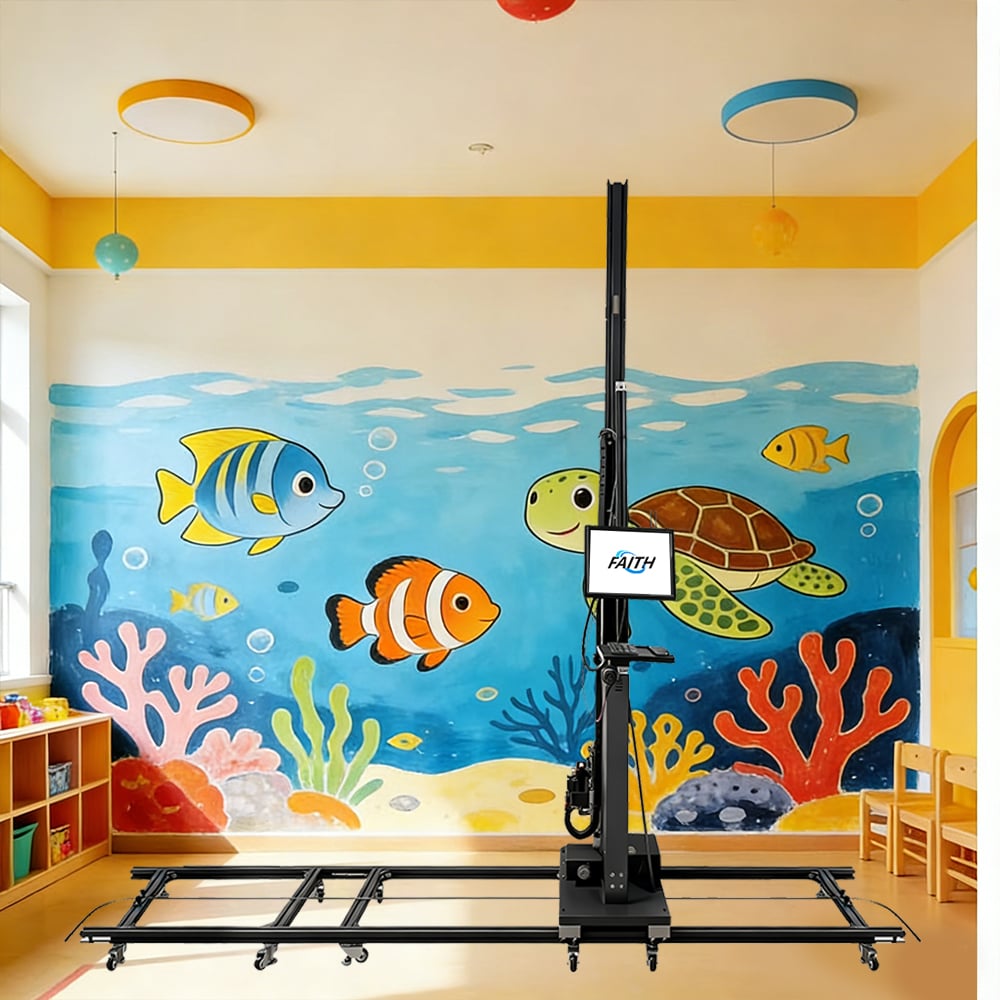
For many years, homeowners have had limited options for wall decoration. They could either install wallpaper, which often involves difficult seams and complicated application, use wall decals with limited texture quality, or commission hand-painted murals, which are costly and time-consuming.
In recent years, a new technology has gradually entered the design field—vertical wall printing systems. Originally used in public spaces such as schools and municipal art projects, this technology is now making its way into residential interiors.
For designers and contractors, it introduces a new way of decorating walls: instead of relying on physical materials, digital artwork is directly printed onto wall surfaces. But how practical is it for home use? This guide explores the topic from multiple perspectives.
How Wall Printing Machines Work
A wall printing machine is essentially an industrial inkjet system designed to operate on vertical surfaces.
Unlike traditional printers, it moves along a rail system while maintaining precise distance from the wall using sensor technology to ensure accurate positioning.
The key technology lies in UV-curable ink. The system prints while simultaneously using ultraviolet light to instantly cure the ink upon contact with the surface. This prevents smudging and ink bleeding, allowing the machine to work not only on painted drywall but also on glass, ceramic tiles, metal, wood, and other materials.
Applications in Residential Environments
In home design, the greatest advantage of wall printing is its customization capability.
It can transform an ordinary living room wall into a visual focal point, featuring landscapes, abstract artwork, or themed designs without additional decorative materials.
With advanced techniques such as white ink layering, the system can also create a subtle 3D relief effect, enhancing visual depth.
This technology is also increasingly popular in children’s rooms, home offices, and creative interior spaces. Compared to traditional hand-painted murals, which may take days or even weeks, wall printing can complete projects in a much shorter time, significantly improving efficiency.
Comparison with Traditional Decoration Methods
Wall Printing vs Wallpaper
Wallpaper relies on adhesives and may develop issues such as peeling, mold, or visible seams over time.
In contrast, wall printing directly bonds the image to the wall surface without physical joints or layered materials, eliminating risks of separation or detachment.
However, due to structural limitations of the equipment, full-wall coverage is not always feasible, and margins around edges are typically required.
Therefore, wall printing is better suited for feature walls rather than full-wall replacement.
In terms of workflow, wallpaper requires design, manufacturing, and shipping, while wall printing only requires a digital file, making the process more efficient.
Wall Printing vs Wall Decals
Vinyl decals often suffer from a visual mismatch due to their glossy plastic texture, which contrasts with matte wall paint.
Wall printing, on the other hand, applies ink directly onto the surface, resulting in a seamless and natural appearance that integrates with the wall itself.
It is especially effective on textured surfaces such as concrete, silica-based coatings, or wood grain finishes, where the printed image blends more naturally with the material.
Wall Printing vs Hand-Painted Murals
Hand-painted murals offer artistic uniqueness but require significant labor, higher cost, and longer completion time.
Wall printing provides a balance between efficiency and artistic expression, enabling high-resolution image output in a relatively short time frame, making it suitable for both commercial and residential applications.
On average, the system can cover approximately 2–6 square meters per hour.
Practical Challenges in Home Applications
1. Is the Ink Safe for Indoor Use?
Safety is a common concern among homeowners.
Unlike traditional wall paint, which releases VOCs during drying, UV ink cures instantly during printing, significantly reducing emission time.
Once cured, the ink layer becomes chemically stable and is generally considered suitable for indoor environments.
2. Will the Print Look Pixelated Up Close?
Some users worry that printed images may appear low quality when viewed at close range.
This issue typically occurs with outdated or low-end equipment, especially older printhead models that may produce banding or visible grain.
Modern systems, however, use high-precision printheads and variable droplet technology, enabling smooth gradients and sharp details even under close inspection.
3. Equipment Stability and Reliability
Stability is critical in residential projects.
If a power failure or system error occurs during printing and the machine lacks a resume function, misalignment may happen, potentially requiring the entire wall to be redone.
For this reason, professional systems are equipped with coordinate memory and power-resume functionality to ensure seamless continuation after interruptions.
4. Can the Design Be Removed or Changed?
UV prints are highly durable, waterproof, and scratch-resistant, making them difficult to remove by simple cleaning.
When a design needs to be changed, the typical solution is to sand the surface and repaint it with a primer to restore a blank base.
In some cases, lighter designs can be overprinted, but this is usually less effective than full repainting, especially when covering dark backgrounds.
Conclusion
Wall printing technology is no longer just a novelty. It is becoming a mature and practical solution in modern interior decoration.
It offers clear advantages in efficiency, customization, and visual impact, while also presenting certain limitations such as edge margins and non-reversible finishes.
For homeowners, the key lies in choosing experienced providers and professional-grade equipment to ensure safety and print quality.
For industry professionals, residential applications represent a promising market, though they require high standards of reliability and precision.
As the technology continues to evolve, wall printing is expected to become an important complement—not a replacement—for traditional interior decoration methods.